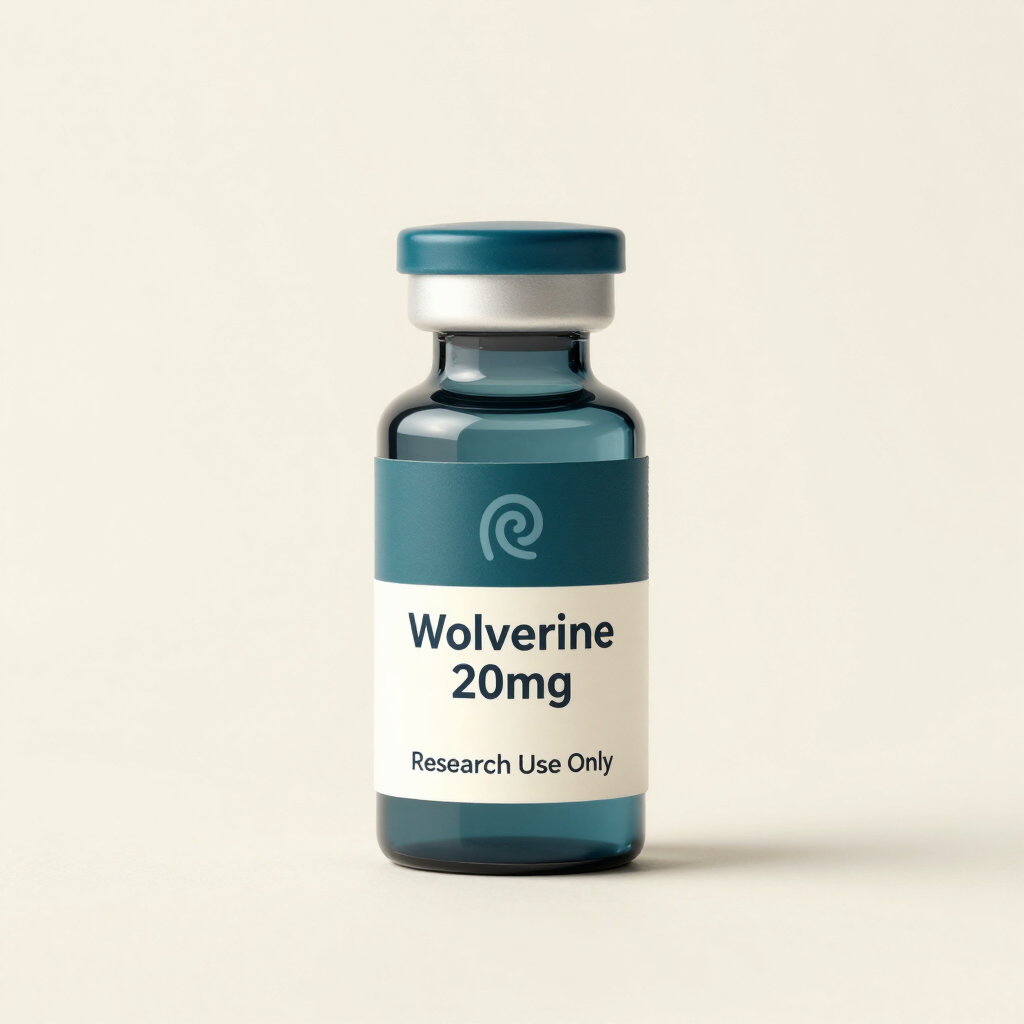
Wolverine research product
The Wolverine research product is available in New Zealand for laboratory study.
The Wolverine stack is a term used in performance, recovery, and biohacking circles to describe a combination of peptides—most notably BPC-157 (Body Protection Compound-157) and TB-500 (a synthetic analog of the natural protein fragment thymosin beta 4). These peptides are claimed to support tissue regeneration, reduce inflammation, speed up recovery of muscles, tendons, ligaments, and soft tissues, and sometimes even serve as alternatives to surgery when healing is stalled.
While the name “Wolverine” evokes resilience, rapid healing, and strength—like the comic book character who regenerates rapidly—it’s important to understand what is known and what remains speculative.
Product Info
Key Components of the Wolverine Stack
BPC-157: A pentadecapeptide (15 amino acids) sometimes called body protection compound 157. It is derived from a protein in the stomach and is purported to help healing of various tissues, including muscles, tendons, ligaments, cartilage, and even the gut. It exists in both injectable and capsule (oral) forms in experimental or underground usage. Preclinical studies indicate that BPC-157 promotes the healing of skin, mucosa, cornea, muscle, tendon, ligament, and bone in animal models. [1]
TB-500: A synthetic version of thymosin beta 4, which in the body plays a role in cell migration, angiogenesis, and tissue repair. It is often included in the Wolverine stack alongside BPC-157 to provide more systemic support for tissue regeneration, particularly where multiple structures (muscles tendons ligaments) are damaged.
Thus the phrase “157 and tb 500”, “bpc 157 and tb”, or “wolverine stack” refers to using both peptides together to try to cover both localized and systemic healing.
Benefits of the Wolverine Stack
Anecdotal reports and animal/preclinical studies suggest several potential benefits:
Accelerated healing of injuries to ligaments, tendons, muscles, and soft tissues. For example, BPC-157 in animal studies improved healing outcomes in tendon and ligament injuries.[2]
Reduced inflammation: The wound-healing process involves inflammation; peptides like BPC-157 may modulate inflammatory responses in ways that reduce swelling and pain.
Tissue regeneration: including promotion of fibroblast migration, increased collagen synthesis, angiogenesis (new blood vessel growth), etc. All these support regeneration rather than just scar formation. [3]
Recovery support: After injuries, strains, surgeries, or overuse, the stack is reported to help speed recovery—less time off, less discomfort, better return of function.
Alternative to surgery in some cases: For individuals hoping to avoid surgery (e.g., for tendon repair, ligament injury), the stack is sometimes promoted as a less invasive option, though this claim is based mostly on animal data and anecdotes.
How to Use the Wolverine Stack
How people typically use BPC-157 + TB-500 in the Wolverine stack (again, mostly in unregulated/experimental settings):
Administration: Injectable form is common (subcutaneous or intramuscular near the site of injury for BPC-157; TB-500 often given systemically). There are also capsule/oral forms for BPC-157 used by some, though absorption and effectiveness may differ.
Dosage (anecdotal): Some protocols suggest BPC-157 at microgram to low microgram per kg doses in animals; human anecdotal dosing is variable, often 250-500 mcg per day (subQ) for BPC-157, and TB-500 perhaps a few milligrams per week split across injections.
Timing: Near injury for BPC-157 (local), TB-500 often used in conjunction to support broader tissue repair. Some begin therapy soon after injury or surgery (pending guidance), while others use it for chronic or overuse injuries.
“Wolverine stack” combining 157 and tb 500: The idea is that BPC-157 handles local healing while TB-500 supports systemic recovery. Most people run the stack for several weeks (4–8 or more) and pair it with the basics — physical therapy, rest, and often cellular-support therapies like NAD IV therapy to keep energy production high through the recovery window.
Cycling the Stack
Because both peptides are experimental and may pose risks, some people “cycle” them:
Use for a certain duration (e.g., 4-8 weeks), then pause to assess results, let the body reset, monitor any adverse effects.
Alternating schedules: some may use TB-500 weekly, BPC-157 daily near injury for a period, then taper.
Combining with other recovery or regenerative protocols (e.g., nutrition, rest, physical therapy) to maximize effect.
Cycling questions don’t stop at peptides — if you’re also using NAD, our guide on how often to take NAD covers the same frequency considerations from the other side.
There is no standard clinical guidance for cycling the stack because human trial data is minimal.
Potential Side Effects
Because the Wolverine stack is not FDA approved and human data is limited, reported side effects are mostly anecdotal, case reports, or extrapolations from animal work:
Injection site reactions (pain, redness, swelling)
Nausea, headaches are reported in some anecdotal reports using peptides.
Risk of infection if injections are not done in sterile settings.
Unknown long-term effects: risk of abnormal tissue growth, scar tissue, or unwanted angiogenesis.
Possible immune or systemic effects, but poorly understood.
Because they are not approved by the FDA for human use, dosing, purity, and safety cannot be guaranteed. Many products sold for “research use only” may be impure or mislabeled.
About this research peptide
Every peptide in our catalogue is supplied as a lyophilised (freeze-dried) powder in a sealed vial, accompanied by a batch number for full traceability. Before release, each batch is analysed by high-performance liquid chromatography (HPLC) to confirm ≥99% purity and by mass spectrometry (MS) to verify sequence identity. A batch-specific Certificate of Analysis is available on request.
For laboratory use, reconstitute the lyophilised peptide using bacteriostatic water or the solvent specified by your research protocol. Store lyophilised vials at −20°C, protected from light and moisture, and keep reconstituted solutions refrigerated at 2–8°C. Always follow your institution’s laboratory safety procedures and handle these compounds in accordance with all applicable New Zealand regulations.
These products are supplied strictly for in-vitro laboratory research purposes only. They are not medicines or dietary supplements, are not for human or veterinary use, and are not intended to diagnose, treat, cure, or prevent any disease.
All products are sold strictly for laboratory research purposes only. Not for human or veterinary use, and not intended to diagnose, treat, cure, or prevent any disease.
Loading reviews…